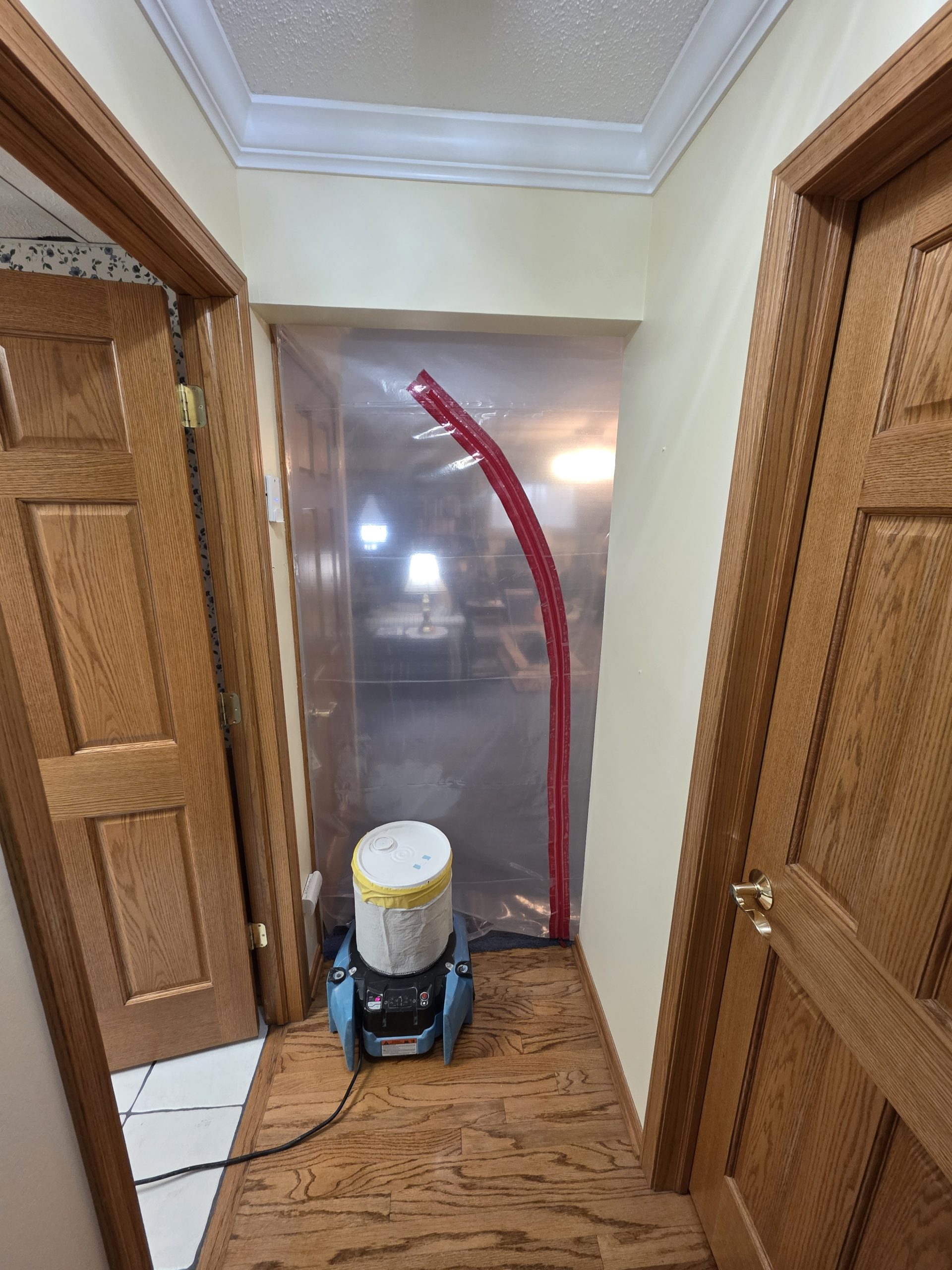
Dehumidification strategies for commercial spaces require significantly different approaches than residential applications due to larger square footage, complex HVAC systems, and stricter regulatory requirements. While residential dehumidifiers typically remove 30-70 pints of moisture daily for spaces under 2,500 square feet, commercial-grade equipment can extract 180-500 pints per day to manage warehouses, office buildings, and industrial facilities that span tens of thousands of square feet.
At Green Clean, we understand that effective moisture control isn’t just about equipment size—it’s about matching the right strategy to your specific environment while minimizing environmental impact.
| Factor | Commercial Spaces | Residential Homes |
| Typical Coverage | 5,000-50,000+ sq ft | 500-3,000 sq ft |
| Capacity Range | 150-500+ PPD | 30-70 PPD |
| Construction | Steel/industrial-grade | Lightweight plastic |
| Operation | Continuous 24/7 | Intermittent/as needed |
| Drainage | Pump/continuous drain | Tank or optional drain |
| HVAC Integration | Typically required | Optional |
| Humidity Precision | 1% increments | 5-10% increments |
| Noise Level | Higher (industrial) | Lower (living spaces) |
Both commercial and residential dehumidification work on the same principle: drawing humid air across cooling coils to condense moisture, then releasing drier air back into the space. The distinction lies in scale, durability, and integration capabilities.
The EPA recommends maintaining indoor humidity between 30-50% for optimal health and comfort. Research published in the journal Indoor Air found that 42% of commercial offices during work hours fell below the recommended 40% relative humidity threshold, while 7% exceeded 60%. These variations can affect employee health, productivity, and building integrity.
For residential environments, ASHRAE guidelines suggest targeting 40-60% relative humidity, with many HVAC professionals recommending the 40-50% range as the ideal balance between comfort and mold prevention.
Large commercial spaces present unique moisture challenges that residential equipment simply cannot address. Warehouses, manufacturing facilities, hospitals, and multi-story office buildings require dehumidification systems engineered for continuous operation across thousands of square feet.
Commercial dehumidifiers are rated by cubic feet per minute (CFM) of airflow and pints per day (PPD) of moisture removal. A facility spanning 5,000 square feet with high humidity conditions typically requires equipment capable of removing 150-250 PPD. Industrial applications may need multiple units working together to achieve target humidity levels.
Commercial buildings also face moisture infiltration from multiple sources: outdoor air introduced through ventilation systems, occupant activity, industrial processes, and building envelope leaks. According to industry data, commercial properties experience faster moisture spread due to interconnected plumbing systems, multiple levels, and larger footprints.
Modern commercial dehumidification systems integrate directly with existing HVAC infrastructure. This coordination prevents conflicts like overcooling or excessive drying while maintaining consistent humidity across different building zones.
Many commercial rooftop units (RTUs) and split systems include built-in dehumidification cycles that operate separately from cooling functions. These systems use longer, slower cooling runs to maximize moisture removal without dropping temperatures uncomfortably low. Buildings with variable occupancy—like churches, auditoriums, and conference centers—often employ reheat coils that remove moisture while maintaining comfortable temperatures.
Commercial and industrial dehumidifiers differ from residential units in several key ways:
Residential dehumidification focuses on creating comfortable, healthy living environments in spaces ranging from single rooms to entire homes. This approach emphasizes ease of use, quiet operation, and aesthetic integration with home décor.
Proper sizing ensures efficient moisture removal without wasting energy. For residential applications, dehumidifier capacity correlates with both square footage and existing humidity levels:
Crawl spaces and basements deserve special attention because they’re prone to high humidity from ground moisture and limited air circulation. A dedicated crawl space dehumidifier rated for 70-80 pints handles most residential applications under 2,000 square feet effectively.
Residential dehumidification options fall into two main categories:
Portable Dehumidifiers: These standalone units work well for targeting specific problem areas like basements, laundry rooms, or bedrooms. They’re affordable, require no professional installation, and can be moved between rooms as needed. However, they require periodic tank emptying unless connected to a drain.
Whole-Home Dehumidifiers: These systems integrate with your home’s existing HVAC ductwork, providing consistent humidity control throughout the entire house. While requiring professional installation and higher upfront costs, whole-home systems offer automated operation, centralized control, and more efficient performance than running multiple portable units.
Selecting appropriate dehumidification depends on several factors beyond just space size:
Moisture Source: Is humidity from outdoor air infiltration, internal processes, water damage, or structural issues? The source determines whether you need temporary equipment, permanent installation, or building envelope repairs.
Temperature Conditions: Standard refrigerant dehumidifiers work best in moderate temperatures (65-80°F). Cold environments like warehouses or crawl spaces may require desiccant dehumidifiers that perform effectively even at freezing temperatures in an exceptionally colder state like Minnesota.
Compliance Requirements: Healthcare facilities, food processing plants, and pharmaceutical manufacturers must meet specific humidity standards. Commercial systems with precise controls and documentation capabilities support regulatory compliance.
Energy Efficiency: Energy Star-certified dehumidifiers use approximately 30% less energy than conventional models. For continuous operation, efficiency ratings significantly impact operating costs.
While small residential moisture issues may be manageable with consumer equipment, certain situations require professional restoration services:
Professional restoration teams use moisture meters, thermal imaging cameras, and psychrometric calculations to develop effective drying strategies. Industrial-grade equipment can reduce drying times from weeks to days, minimizing business disruption and preventing secondary damage.
What humidity level should I maintain in my home or business?
The EPA recommends keeping indoor humidity between 30-50%, while ASHRAE suggests 40-60% for occupied spaces. For most applications, targeting 45-50% relative humidity provides optimal comfort while preventing mold growth and protecting building materials.
Can I use a residential dehumidifier in a commercial space?
Residential dehumidifiers lack the capacity, durability, and features required for commercial applications. They’re not designed for continuous operation and cannot handle the moisture loads typical in large spaces. Using undersized equipment leads to inadequate moisture control and premature equipment failure.
How long does commercial water damage restoration take?
Professional drying typically takes several days for moderate damage. Extensive water intrusion, complex building layouts, or environmental conditions can extend timelines to two weeks or longer. Commercial properties often face longer restoration periods due to larger affected areas.
Do commercial dehumidifiers integrate with building automation systems?
Yes, modern commercial dehumidifiers feature advanced controls compatible with building management systems. This integration enables centralized monitoring, automated operation based on humidity sensors, and coordinated performance with HVAC equipment.
What’s the difference between refrigerant and desiccant dehumidifiers?
Refrigerant dehumidifiers condense moisture on cooled coils and work best in moderate-to-warm temperatures. Desiccant dehumidifiers use moisture-absorbing materials and excel in cold environments or applications requiring very low humidity levels. Commercial facilities often use both types depending on specific requirements.
Prev: Eco-Friendly Low-VOC Cleaning Protocols for Commercial Water Damage in Twin CitiesNext: 24/7 Emergency Fire Mitigation Protocols for Twin Cities Commercial PropertiesView All Resources